Insights and Tips for Effective Team Building | Action Teams
In the modern fast-paced corporate world and the organisations today widely know that only teamwork increases productivity, innovation and satisfaction of employees. Businesses that actually invest in meaningful engagement initiatives ultimately find greater communication, higher morale and improved inter-departmental collaboration. This is wherein Action Teams shines as a trusted partner, providing experiential learning programs and lively company events.
Team Building programs are an excellent opportunity to design experiences which cater beyond fun but also result in a lasting impact at the workplace. So here are some key insights and tips to help you plan for and find success with team building efforts.
Understanding the Purpose of Team Building
Having an idea of what you want before planning any sort of activity is very important. Team building is much more than a series of fun games, it’s a mindful process that dives into operational improvements such as cooperation, trust and communication. Structured activities are a great way for teams to prepare for actual work situations while building morale, culture and motivation.
Well-defined goals also help ensure your event has measurable impacts, whether you’re looking to strengthen cross-functional relationships, onboard new hires, or hone leadership skills.
Tip 1: Align Activities with Organisational Goals
Effective team building starts with alignment. Consider your organisation’s current challenges and priorities. For example:
- Communication gaps between departments
- Low engagement in remote teams
- Leadership development needs
- Conflict resolution requirements
Action Teams usually starts with conversations regarding goals and expected takeaways, to make sure that activities are tailored around organisational context. When activities mirror business needs, the relevance is clear to participants and they are more invested in the outcomes.
Tip 2: Choose Experiential Learning Approaches
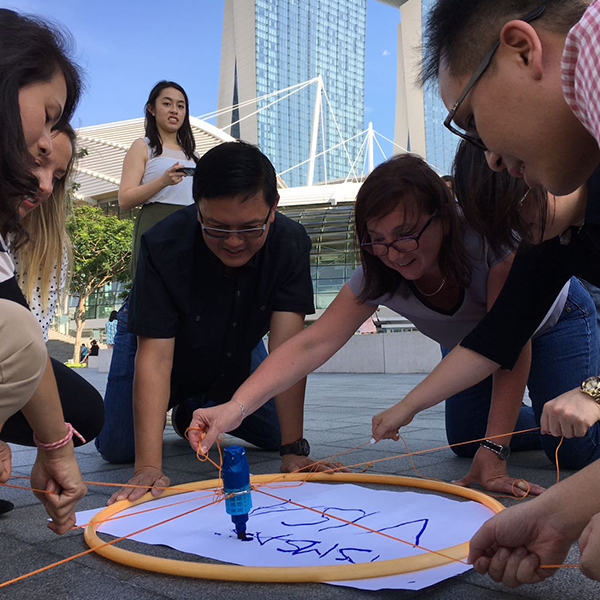
Among the most compelling insights of modern corporate education is that experiential learning is powerful. Action Teams combines action with facilitated debrief sessions to enable participants to reflect on learning and transfer it into their work environment.
Such a technique turns regular games into learning tools that develop skills like problem-solving, decision-making and adaptability.
Tip 3: Encourage Open Communication
When it comes to teamwork, communication is key. Planning, discussing and coordinating activities naturally strengthen interpersonal connections. So, after lengthy work hours and routine tasks, team building programs increase the interaction among employees and enable them to know each other’s perspectives and communication styles.
Ensure to encourage teams to do the following to maximise impact:
- Share ideas freely
- Rotate leadership roles
- Practice active listening
- Provide constructive feedback
These behaviours promote psychological safety and better collaboration.
Tip 4: Promote Trust and Relationship Building
Trust is the foundation of high-performing teams. Designed well, the challenges make participants count on each other’s strengths to forge mutual confidence and camaraderie. Action Teams’ experiential programs encourage empathy, team spirit and participative culture, tearing down silos among colleagues.
Adding in trust-based tasks — like collaborative problem solving or resource-sharing challenges — can build some much-needed team cohesion.
Tip 5: Incorporate Variety and Inclusivity
Team Building Strategy that works: A successful team building program takes into account the different personalities, skill levels and preferences of your people. Combining physical, creative and cognitive challenges means that all participants can engage meaningfully. Action Teams can be run in indoor or outdoor formats, enabling organisations to up-skill teams of any size and working arrangements.
Focusing on inclusion has been found to lead to a higher level of participation rates and for new, undiscovered talent within the workforce.
Tip 6: Foster Healthy Competition
When managed positively, competition can also energise teams and drive engagement. Additional adventure-based team-building challenges, quests and collaborative races add excitement while fostering teamwork under pressure. These engage strategizing, leadership and teamwork akin to workplace dynamics.
Keep competition friendly by focusing on the learning and collaboration, not just the victory.
Tip 7: Measure Outcomes and Gather Feedback
Evaluation: an element of the implementation process that is often ignored, yet allows for systematic reflection and continuous improvement. Collect feedback after the event through surveys, discussions or reflection sessions. Action Teams suggests analyzing main takeaways and experiences from participants to determine its effectiveness, as well as what can be done differently in the future.
Metrics to consider include:
- Participant satisfaction
- Communication improvements
- Collaboration levels
- Leadership development indicators
- Team Building’s Long Lasting Effect
The Long-Term Impact of Team Building
If an organisation focuses on team building, it creates a ripple effect through the entire system. The businesses that join up with Action Teams indicate better decision-making, conflict resolution, customer service and adaptability to change.
These initiatives play an important role in fostering a culture of cooperation and unified objectives, which prepares squad members to deliver results in constantly changing business environments beyond instantly incentivized engagement.
Conclusion
Effective team building combines strategic planning, experiential learning, and inclusive participation. Action Teams delivers impactful programs that strengthen communication, trust, and collaboration. By applying these insights and tips, organisations can create engaging experiences that inspire teamwork and long-term workplace success.